
Amarae Inspirational
Energy Healing: The Controversy, The Curiosity, and The Experience
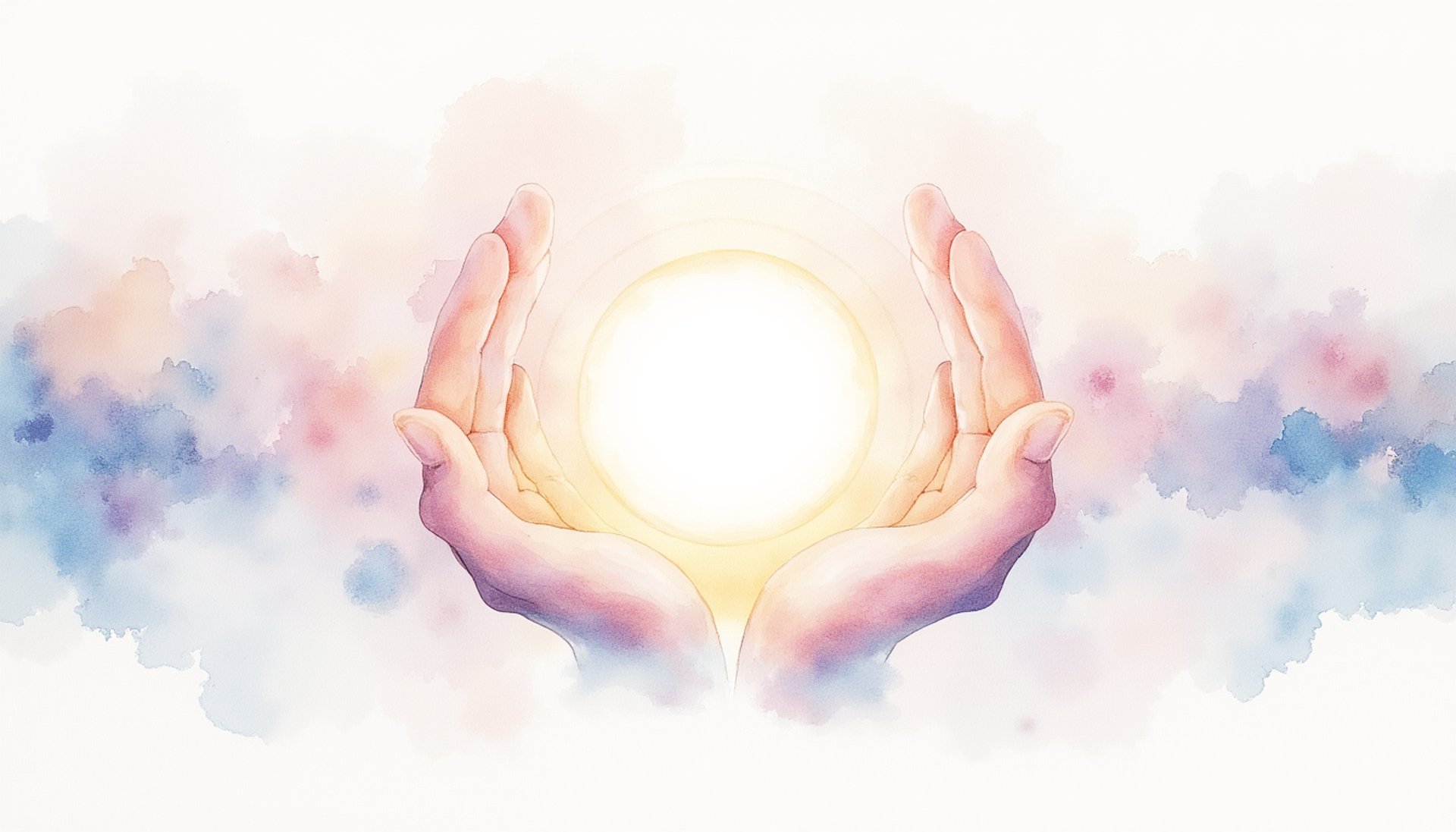
Energy healing is one of those topics that instantly divides opinions. Some people see practices like Reiki as a natural way to support balance and well-being. Others dismiss it as unscientific or purely imaginary. And then there is a third group ... the quietly curious ... people who are not fully convinced but are open enough to explore the experience. After many years of working as a Reiki practitioner and teacher, I have encountered all three perspectives. I’ve worked with skeptical clients, curious observers, and people who deeply believe in energetic healing. I’ve also been yelled at during a fair by people convinced I was doing the work of the devil. This article isn’t about trying to prove who is right. Instead, it’s a reflection on the controversy around energetic healing ... like Reiki ... the experiences I’ve witnessed, and why healing doesn’t require us to understand every detail of how it works.
SPIRITUALLIFEHEALINGPOINT OF VIEWQUERY
Rosita
3/7/20268 min read


A Reiki Master’s reflections on belief, doubt, and the quiet controversy around energy healing
Healing Without Needing All the Answers
Before diving into this topic, it might help to know where my perspective comes from.
I have been a Reiki Master and teacher for more than twenty years.
During that time I have worked with many clients in healing sessions and have also guided students as they began their own journey with Reiki.
Over those years I have seen how different people experience energy healing ... the believers, the skeptics, and everyone in between ... and I have come to appreciate just how complex and fascinating the conversation around Reiki or any other form of energy healing really is.
One of the questions I hear most often as a Reiki Master and teacher is also one of the hardest to answer in a single sentence.
“So… how does Reiki actually work?”
People usually ask this with sincere curiosity. Sometimes they lean forward when they ask it, hoping for an explanation about energy fields, universal forces, or the hidden mechanics of healing. Other times the question comes with a slightly raised eyebrow, the polite version of: “Convince me.”
And honestly, I understand both reactions.
Energy healing sits right in the middle of one of the most interesting debates in the world of wellness. Some people believe in it deeply. Some reject it completely. And some simply remain curious without feeling the need to take a strong position.
After many years of practicing Reiki, I have come to appreciate all three.
Because the truth is: healing does not always depend on belief.
And perhaps even more importantly, we do not need to understand everything in order to work with it.
The Great Energy Healing Debate
If you spend enough time around holistic practices, you will quickly notice that energy healing can trigger strong reactions.
There are people who see Reiki and similar practices as a natural part of life.
To them, the idea that energy flows through the body and can influence
well-being feels intuitive and almost obvious.
Then there are those who see it very differently.
For them, anything that cannot be measured clearly or explained through
established scientific mechanisms raises immediate doubts.
They want evidence, data, controlled experiments, and repeatable results.
And that is perfectly understandable.


Healthy skepticism has its place.
It prevents people from making exaggerated claims or promising miracles.
But there is also a third group that I personally find the most interesting ... the open-minded observers. They are not ready to believe everything they hear,
but they are also not in a hurry to dismiss something simply because it does not yet fit into a neat scientific explanation.
They simply say: “Maybe there is something to it. Maybe there isn’t. Let’s see.”
But Reiki works with people from all three groups. Reiki does not care whether people believe in it or not, it simply is.
A Session That Stayed With Me
One of the experiences that stayed with me involved a client whose situation was unusual even for me.
She came to see me because of a severe sensitivity in the skin on her face, and to a lesser extent the rest of her body.
Her face was so sensitive that she could barely tolerate being touched at all.
What made the situation even more interesting was that her husband was a general practitioner, a very practical, medically trained man who had already explored every option he knew. Eventually he reached a point where he simply ran out of medical solutions.
Out of a mixture of curiosity and a little bit of desperation, she decided to try Reiki.
When she arrived for the session, she explained that touching her face was impossible. Even the lightest contact caused discomfort.
So we sat down and talked about what I could and could not do.
We talked about the emotional distress that came with it and the frustration she had been living with. Not just for me, but for her, she needed to feel at easy, I wanted her to relax as much as possible.
Normally Reiki involves gentle hands-on positions, but in this case that clearly wasn’t an option.
I made the decision to do the entire session without touching any part of her body.
That way she could relax without worrying that she might suddenly experience a touch that could be uncomfortable or even painful.
That guarantee helped her relax. For more than an hour I worked entirely without touching her, keeping my hands above the body instead of touching.
To be honest, I had no idea what the result would be.
I had never done a completely hands-off healing session before.
But I knew from experience that Reiki flows where it is needed, whether there is physical contact or not.
Still, I was curious whether the experience would feel as strong as with hands-on techniques.
Sometimes Reiki sessions feel very powerful. Sometimes they feel subtle. Healing rarely follows a predictable script.
The session ended peacefully and she went home. The next day she contacted me.
She was crying.
Not because something had gone wrong, but because the improvement had been so noticeable.
The sensitivity in her face had decreased dramatically. She was overwhelmed.
Now, could there be different explanations for what happened?
Of course.
Maybe the deep relaxation calmed her nervous system. Maybe her body simply needed the right moment to reset. Maybe something else entirely was involved.
The honest answer is ... I don’t know exactly why it worked.
But something helped her ... and that mattered.
When Belief Turns Into Conflict
Not all encounters around Reiki are calm and reflective.
Years ago I was working at a fair where different holistic practitioners had small stands.
People could walk around, ask questions, and try short sessions.
Most visitors were curious and respectful.
But at one point a small group of very passionate religious individuals arrived.
They did not approach quietly. Quite the opposite, to be honest.
Apparently, in their view, what I was doing was “the work of the devil.”
This opinion was delivered quite loudly in the middle of the fair.
Later I realized how lucky I was that I was already an experienced practitioner and teacher.
If something like that had happened when I was just starting out,
it might have destroyed my confidence completely. I might never have attended another fair again.
But in that moment I mostly felt fascinated by the situation.
Here I was offering people relaxation, calm, and a moment of care… and somehow that had been interpreted as dark supernatural activity!
The contradiction was almost impressive ... I may even have rolled my eyes a little.
Moments like that remind me how strongly belief systems shape the way we interpret unfamiliar things.
Some people react with curiosity ... Some react with skepticism ... And occasionally… some react by accusing you of collaborating with the devil.
Human beings are wonderfully complex creature


The Toolbox Perspective
Over time my perspective on Reiki has actually become simpler.
I do not see it as something that needs to compete with science, religion, or medicine. I see it as a tool. A gentle, compassionate tool.
Life is full of tools that support our well-being ... doctors use medical treatments ... therapists use psychological techniques ... meditation helps calm the mind ... exercise strengthens the body ... and Reiki? ... Reiki is simply one more instrument in that larger toolbox!
For some people it works beautifully ... for others it may do very little.
And that is completely fine. No single method works for everyone.
The real mistake would be believing that one approach must replace all others.
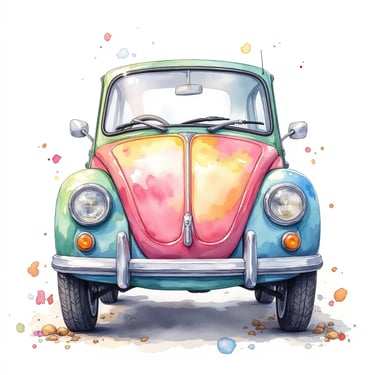
The Car Analogy
Sometimes I explain this with a very simple comparison.
I know how to drive a car.
I can drive with a stick shift. I know how to change the oil. I understand the basic things required to keep the car running smoothly.
But if you asked me to explain exactly how the engine works, every moving part, every chemical reaction, every mechanical interaction, I would probably stare at you blankly.
I have no clue.
And yet that lack of knowledge does not prevent me from driving from point A to point B.
Because I know how to work with the car, even if I do not fully understand the engineering behind it.
In many ways, energy healing can be similar.
We may not yet understand every mechanism behind the experiences people report.
But that does not automatically mean the experiences themselves are meaningless.
The Quiet Middle Ground
In today’s world, discussions about healing practices often become strangely polarized. You are expected to either believe completely or reject completely.
But real life is rarely that simple. There is a quiet middle ground where curiosity lives.
A place where we can say ... Maybe there is something here ... maybe there isn’t.
But if people are finding comfort, relaxation, and support through it, perhaps it deserves thoughtful exploration rather than immediate dismissal.
Personally, that is the space I feel most comfortable in.
I do not claim to have discovered some universal secret.
But I have seen people relax deeply, release emotional tension, and sometimes experience improvements that surprised not only them but me as well.
That alone makes the work meaningful and requires respect, regardless of your personal point of view.
Healing Without Needing All the Answers
After many years of practicing and teaching Reiki, one thing has become very clear to me ...
Healing does not always need a perfect explanation in order to be valuable. Sometimes what matters most is the experience itself!
A moment of calm ... a sense of relief ... a body finally relaxing after weeks of tension.
If someone leaves a session feeling just a little lighter than when they arrived, then I have done my job and Reiki has done what it could for that person in that moment. Whether someone interprets that through science, spirituality, psychology, or simple human care is ultimately their own choice.
Reiki does not need everyone to believe in it.
And I came to the conclusion a long time ago that it is not my job to convince people or to force an explanation that makes them comfortable!
People who do not want to believe will not change their minds because of my explanations.
Going for a healing session is a personal choice.
The practitioner’s only role is to guide the energy to travel from A to B.
But I want to make it very clear, even though I do understand that people have questions, have doubts about energy healing or are struggling with getting their head around on how it works ...
For me, Reiki simply is, and always will be, what it has been from the beginning:
One quiet, and for me sacred, tool in a very large toolbox.
And sometimes that one tool happens to help exactly when it is needed ... and perhaps that is enough!
Not everything in life needs to be fully understood before it can be meaningful or helpful.
Sometimes it is enough to stay curious, to remain open, and to allow people to explore what works for them.
Whether someone approaches Reiki with belief, skepticism, or simple curiosity, the most important thing is the experience itself.
If a moment of calm, balance, or relief is created, then something valuable has already happened ... explanation or not.
After all, most of us drive cars every day without understanding the engine ... yet somehow we still get where we need to go.
Rosita
A Reiki Master’s reflections on belief, doubt, and the quiet controversy around energy healing
Healing Without Needing All the Answers
Before diving into this topic, it might help to know where my perspective comes from.
I have been a Reiki Master and teacher for more than twenty years.
During that time I have worked with many clients in healing sessions and have also guided students as they began their own journey with Reiki.
Over those years I have seen how different people experience energy healing ... the believers, the skeptics, and everyone in between ... and I have come to appreciate just how complex and fascinating the conversation around Reiki or any other form of energy healing really is.
One of the questions I hear most often as a Reiki Master and teacher is also one of the hardest to answer in a single sentence.
“So… how does Reiki actually work?”
People usually ask this with sincere curiosity. Sometimes they lean forward when they ask it, hoping for an explanation about energy fields, universal forces, or the hidden mechanics of healing. Other times the question comes with a slightly raised eyebrow, the polite version of: “Convince me.”
And honestly, I understand both reactions.
Energy healing sits right in the middle of one of the most interesting debates in the world of wellness. Some people believe in it deeply. Some reject it completely. And some simply remain curious without feeling the need to take a strong position.
After many years of practicing Reiki, I have come to appreciate all three.
Because the truth is: healing does not always depend on belief.
And perhaps even more importantly, we do not need to understand everything in order to work with it.
The Great Energy Healing Debate
If you spend enough time around holistic practices, you will quickly notice that energy healing can trigger strong reactions.
There are people who see Reiki and similar practices as a natural part of life.
To them, the idea that energy flows through the body and can influence
well-being feels intuitive and almost obvious.
Then there are those who see it very differently.
For them, anything that cannot be measured clearly or explained through
established scientific mechanisms raises immediate doubts.
They want evidence, data, controlled experiments, and repeatable results.
And that is perfectly understandable.
Healthy skepticism has its place.
It prevents people from making exaggerated claims or promising miracles.
But there is also a third group that I personally find the most interesting ... the open-minded observers. They are not ready to believe everything they hear,
but they are also not in a hurry to dismiss something simply because it does not yet fit into a neat scientific explanation.
They simply say: “Maybe there is something to it. Maybe there isn’t. Let’s see.”
But Reiki works with people from all three groups. Reiki does not care whether people believe in it or not, it simply is.
A Session That Stayed With Me
One of the experiences that stayed with me involved a client whose situation was unusual even for me.
She came to see me because of a severe sensitivity in the skin on her face, and to a lesser extent the rest of her body.
Her face was so sensitive that she could barely tolerate being touched at all.
What made the situation even more interesting was that her husband was a general practitioner, a very practical, medically trained man who had already explored every option he knew. Eventually he reached a point where he simply ran out of medical solutions.
Out of a mixture of curiosity and a little bit of desperation, she decided to try Reiki.
When she arrived for the session, she explained that touching her face was impossible. Even the lightest contact caused discomfort.
So we sat down and talked about what I could and could not do.
We talked about the emotional distress that came with it and the frustration she had been living with. Not just for me, but for her, she needed to feel at easy, I wanted her to relax as much as possible.
Normally Reiki involves gentle hands-on positions, but in this case that clearly wasn’t an option.
I made the decision to do the entire session without touching any part of her body.
That way she could relax without worrying that she might suddenly experience a touch that could be uncomfortable or even painful.
That guarantee helped her relax. For more than an hour I worked entirely without touching her, keeping my hands above the body instead of touching.
To be honest, I had no idea what the result would be.
I had never done a completely hands-off healing session before.
But I knew from experience that Reiki flows where it is needed, whether there is physical contact or not.
Still, I was curious whether the experience would feel as strong as with hands-on techniques.
Sometimes Reiki sessions feel very powerful. Sometimes they feel subtle. Healing rarely follows a predictable script.
The session ended peacefully and she went home. The next day she contacted me.
She was crying.
Not because something had gone wrong, but because the improvement had been so noticeable.
The sensitivity in her face had decreased dramatically. She was overwhelmed.
Now, could there be different explanations for what happened?
Of course.
Maybe the deep relaxation calmed her nervous system. Maybe her body simply needed the right moment to reset. Maybe something else entirely was involved.
The honest answer is ... I don’t know exactly why it worked.
But something helped her ... and that mattered.
When Belief Turns Into Conflict
Not all encounters around Reiki are calm and reflective.
Years ago I was working at a fair where different holistic practitioners had small stands.
People could walk around, ask questions, and try short sessions.
Most visitors were curious and respectful.
But at one point a small group of very passionate religious individuals arrived.
They did not approach quietly. Quite the opposite, to be honest.
Apparently, in their view, what I was doing was “the work of the devil.”
This opinion was delivered quite loudly in the middle of the fair.
Later I realized how lucky I was that I was already an experienced practitioner and teacher.
If something like that had happened when I was just starting out,
it might have destroyed my confidence completely. I might never have attended another fair again.
But in that moment I mostly felt fascinated by the situation.
Here I was offering people relaxation, calm, and a moment of care… and somehow that had been interpreted as dark supernatural activity!
The contradiction was almost impressive ... I may even have rolled my eyes a little.
Moments like that remind me how strongly belief systems shape the way we interpret unfamiliar things.
Some people react with curiosity ... Some react with skepticism ... And occasionally… some react by accusing you of collaborating with the devil.
Human beings are wonderfully complex creature
The Toolbox Perspective
Over time my perspective on Reiki has actually become simpler.
I do not see it as something that needs to compete with science, religion, or medicine. I see it as a tool. A gentle, compassionate tool.
Life is full of tools that support our well-being ... doctors use medical treatments ... therapists use psychological techniques ... meditation helps calm the mind ... exercise strengthens the body ... and Reiki? ... Reiki is simply one more instrument in that larger toolbox!
For some people it works beautifully ... for others it may do very little.
And that is completely fine. No single method works for everyone.
The real mistake would be believing that one approach must replace all others.
The Car Analogy
Sometimes I explain this with a very simple comparison.
I know how to drive a car.
I can drive with a stick shift. I know how to change the oil. I understand the basic things required to keep the car running smoothly.
But if you asked me to explain exactly how the engine works, every moving part, every chemical reaction, every mechanical interaction, I would probably stare at you blankly.
I have no clue.
And yet that lack of knowledge does not prevent me from driving from point A to point B.
Because I know how to work with the car, even if I do not fully understand the engineering behind it.
In many ways, energy healing can be similar.
We may not yet understand every mechanism behind the experiences people report.
But that does not automatically mean the experiences themselves are meaningless.
The Quiet Middle Ground
In today’s world, discussions about healing practices often become strangely polarized. You are expected to either believe completely or reject completely.
But real life is rarely that simple. There is a quiet middle ground where curiosity lives.
A place where we can say ... Maybe there is something here ... maybe there isn’t.
But if people are finding comfort, relaxation, and support through it, perhaps it deserves thoughtful exploration rather than immediate dismissal.
Personally, that is the space I feel most comfortable in.
I do not claim to have discovered some universal secret.
But I have seen people relax deeply, release emotional tension, and sometimes experience improvements that surprised not only them but me as well.
That alone makes the work meaningful and requires respect, regardless of your personal point of view.
Healing Without Needing All the Answers
After many years of practicing and teaching Reiki, one thing has become very clear to me ...
Healing does not always need a perfect explanation in order to be valuable. Sometimes what matters most is the experience itself!
A moment of calm ... a sense of relief ... a body finally relaxing after weeks of tension.
If someone leaves a session feeling just a little lighter than when they arrived, then I have done my job and Reiki has done what it could for that person in that moment. Whether someone interprets that through science, spirituality, psychology, or simple human care is ultimately their own choice.
Reiki does not need everyone to believe in it.
And I came to the conclusion a long time ago that it is not my job to convince people or to force an explanation that makes them comfortable!
People who do not want to believe will not change their minds because of my explanations.
Going for a healing session is a personal choice.
The practitioner’s only role is to guide the energy to travel from A to B.
But I want to make it very clear, even though I do understand that people have questions, have doubts about energy healing or are struggling with getting their head around on how it works ...
For me, Reiki simply is, and always will be, what it has been from the beginning:
One quiet, and for me sacred, tool in a very large toolbox.
And sometimes that one tool happens to help exactly when it is needed ... and perhaps that is enough!
Not everything in life needs to be fully understood before it can be meaningful or helpful.
Sometimes it is enough to stay curious, to remain open, and to allow people to explore what works for them.
Whether someone approaches Reiki with belief, skepticism, or simple curiosity, the most important thing is the experience itself.
If a moment of calm, balance, or relief is created, then something valuable has already happened ... explanation or not.
After all, most of us drive cars every day without understanding the engine ... yet somehow we still get where we need to go.
Rosita
Connect & Inspire
© 2025. All rights reserved.
Subscribe to our free online magazine
Good Times
Once every 2 months